The Path to Composition

From the musical circle in Ilyas Aubakirov's home and the victory of 1947 — through the dombra, the conservatory and thirty-two years of editorial and university work — to a craft carried forward by students.

In Ilyas Aubakirov’s home, Kenzhebek Kumysbekov listened to songs and kui, the instrumental pieces at the heart of the Kazakh dombra tradition. Then came the dream of singing, the victory of 1947, the dombra, the orchestra and years spent studying composition. The music of home became the beginning of a professional life.

Illness closed the path to a singing career but did not halt his musical education. His studies were followed by thirty-two years of work: editorial posts at the Philharmonic and Ministry of Culture, the folk instruments department, titles and students. Four stories lead from the listening habits of home to a craft passed on to others; a short testimony preserves one August evening in 1990.

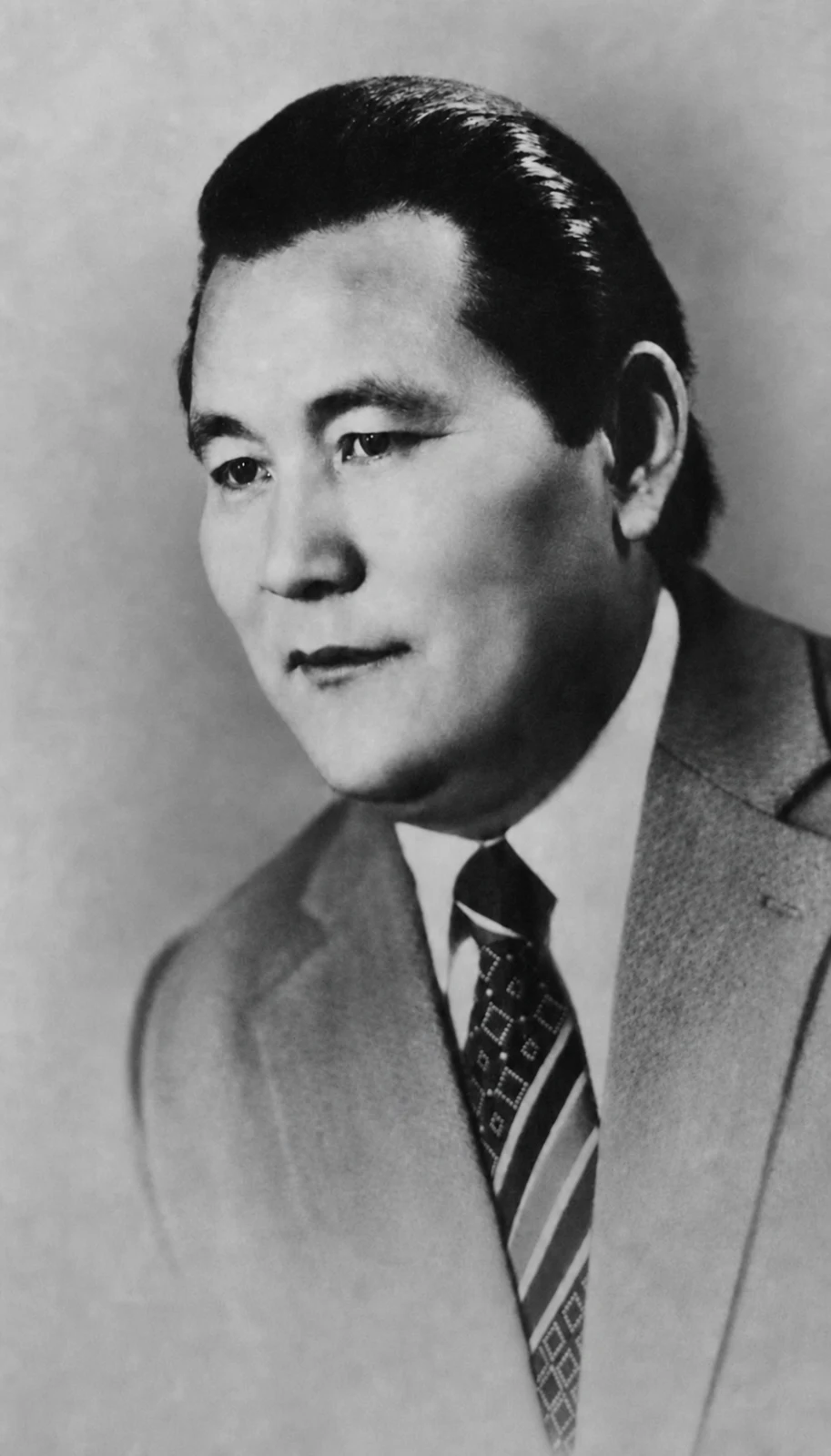
Family portrait of a man in a suit and tie

01

From the voice of home to composition

In 1947 Kumysbekov won the All-Kazakhstan Olympiad of Folk Talents. Two years later he entered the conservatory’s vocal department, but illness closed the path to singing. His path in music continued.

The dombra brought him to the Kurmangazy Orchestra, his first art song led to the advice of Mukan Tulebayev, and then came years of study with Yevgeny Brusilovsky. Voice, dombra, orchestra and that first song led Kumysbekov to composition — The Years of Study.

02

Thirty-two years of work

His studies ended in 1965, and the work that occupied the rest of his life began. Kumysbekov became music editor at the Kazakh State Philharmonic, then senior editor of the Ministry of Culture’s repertoire and editorial board — a person with a hand in deciding which score entered a programme and what an audience would hear. From 1972 he taught orchestral conducting in the folk instruments department. People’s Artist of the Kazakh SSR, Honoured Art Worker, State Prize laureate and professor: composer, editor and teacher met in one person — The Mature Years.

03

The written line and a living tradition

Karshyga Akhmediyarov remembered Kumysbekov’s answer to opponents of musical notation: he suggested that they go out into the steppe and pitch a yurt. Behind the remark lay a simple question — how could living music be preserved and passed on without a written score? In Akhmediyarov’s account, it became an argument for transmitting tradition — The Written Line and the Yurt.

In another episode, two senior composers — Sydyk Mukhamedzhanov and Kumysbekov — reproached younger authors: a new song should not lose its national character. The written line and exacting standards for new music became two sides of the same work — continuing tradition.

04

The craft continues through his students

Ykylas Nurgaliyev described Kumysbekov as his teacher of instrument studies. Recalling his admission in 1992, Yerkin Nurymbetov associated Kumysbekov’s name with both instrument studies and orchestration. Two subjects and the teacher’s name remained in his students’ memories — The Orchestration Class.

Teaching extended the composer’s path into his students’ professions. Orchestration and instrument studies travelled onward — together with the teacher’s name.

This is how the path to composition reaches its conclusion: not only in his own scores, but in a craft continued through the work of other musicians.
Continue in the Reading Room