From dombra to orchestra
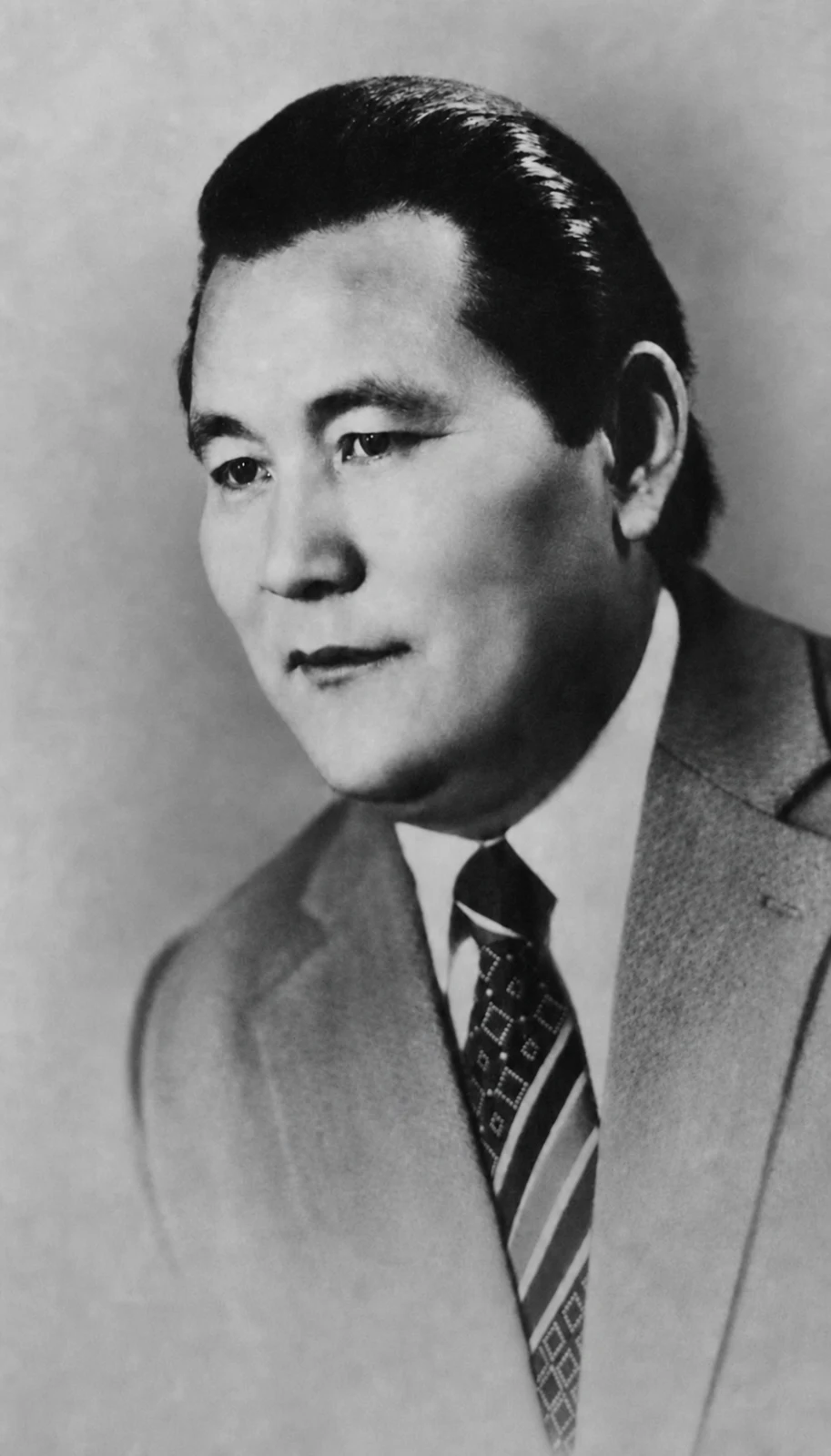
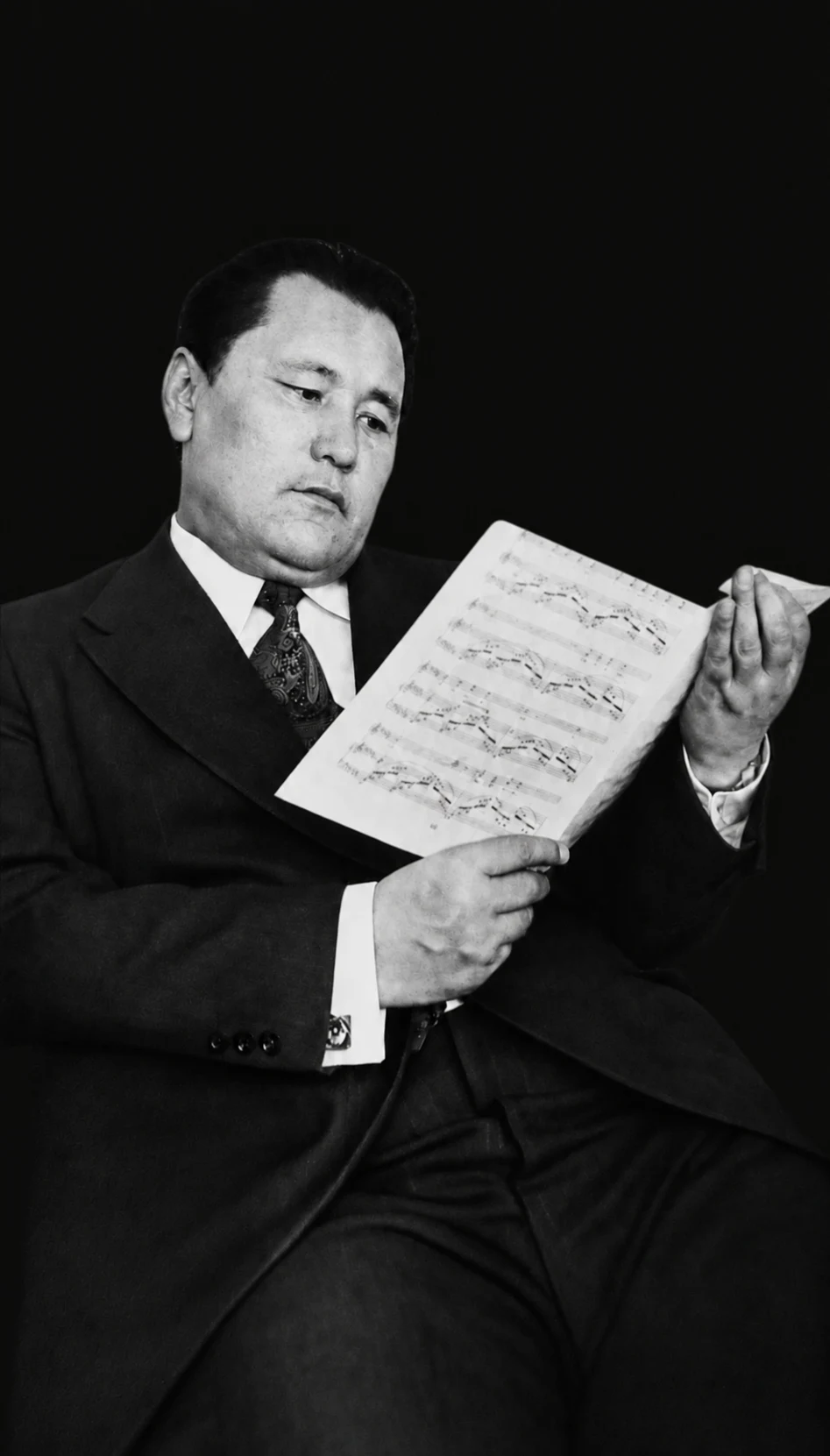
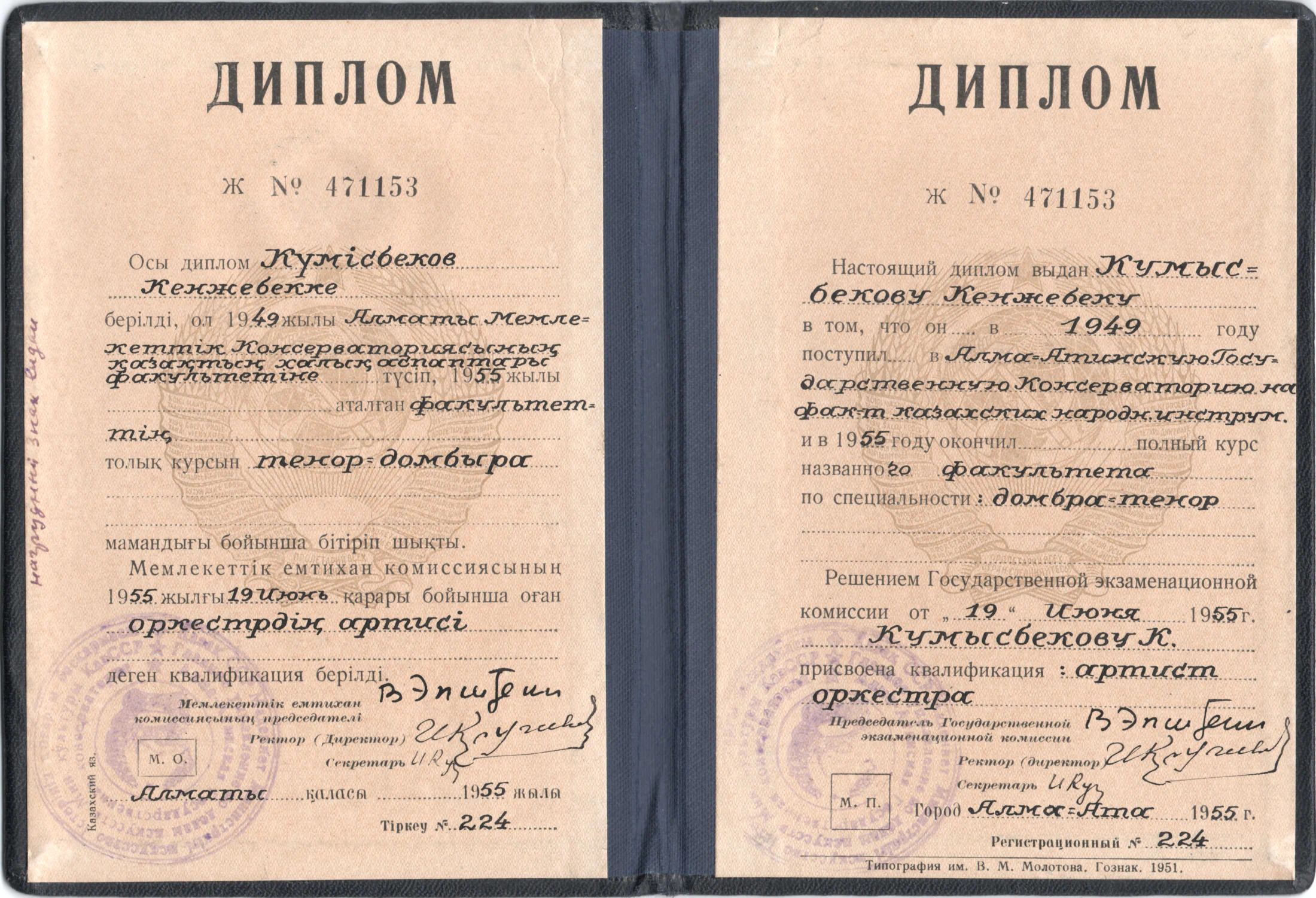
Kenzhebek Kumysbekov first wanted to become a singer. In 1947, at the age of twenty, he won the All-Kazakhstan Olympiad of Folk Talents in Alma-Ata. The composers Akhmet Zhubanov and Latif Khamidi, who sat on the jury, advised him to study music. He entered the conservatory with a dream of singing. But a lung illness interrupted his vocal studies. Kumysbekov moved to the dombra class — an instrument he had known since childhood through his father’s playing.
In the village of Kumkol, music sounded at home: his father played and his mother sang. After his father’s early death, the boy learned from Ilyas Aubakirov, a singer and connoisseur of kui — Kazakh instrumental pieces. Kumysbekov brought this memory of sound to the conservatory. In the classes of Rustembek Omarov and Kubysh Mukhitov, it became the craft of a professional performer.
During the 1950s he played in the Kurmangazy Orchestra of Kazakh Folk Instruments and made arrangements for it. The dombra player heard the ensemble from within: how different instruments entered, how one voice answered another, how a melody changed when a whole orchestra played it. The future composer grew out of this daily practice.
The birth of the kui-poem
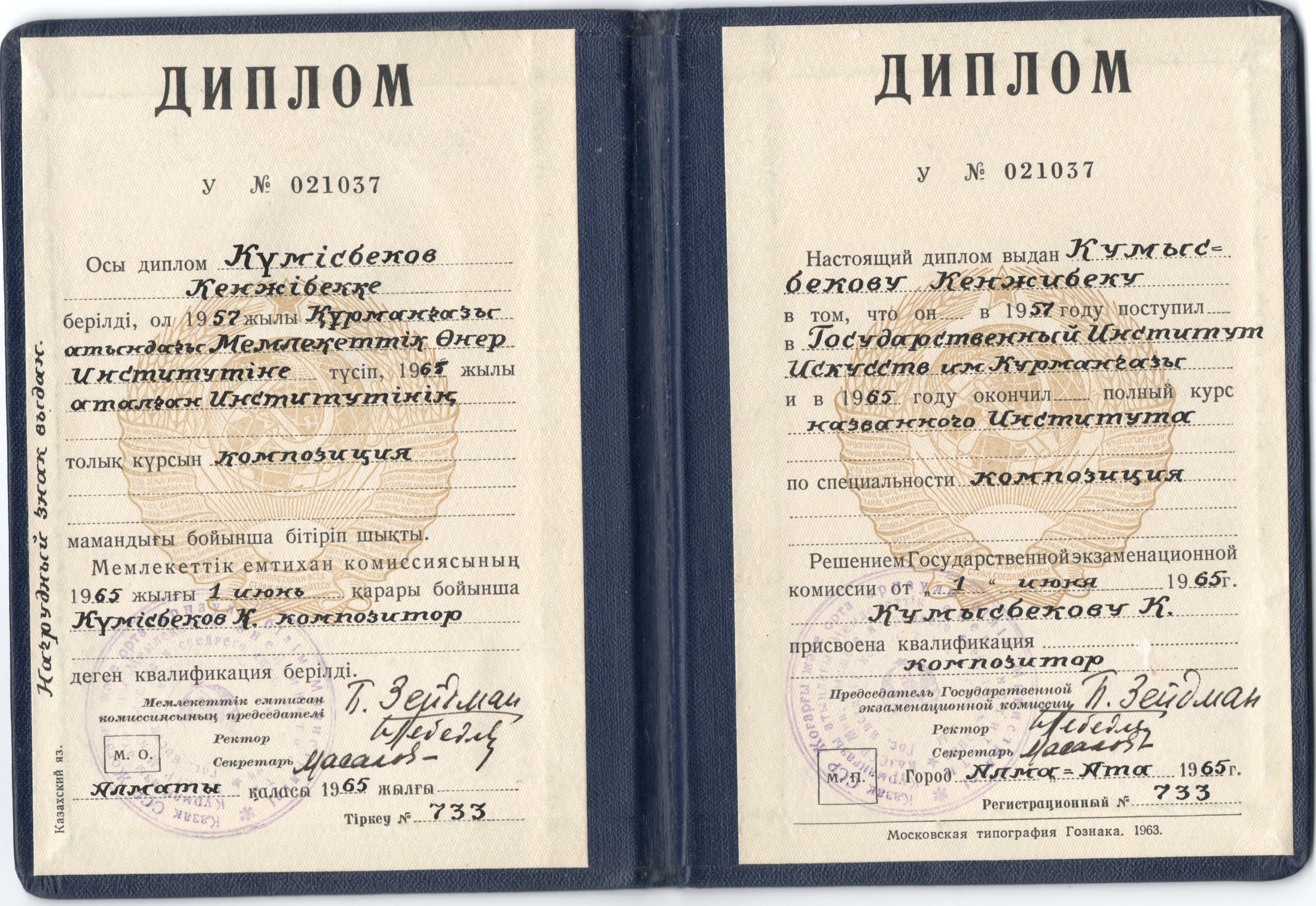
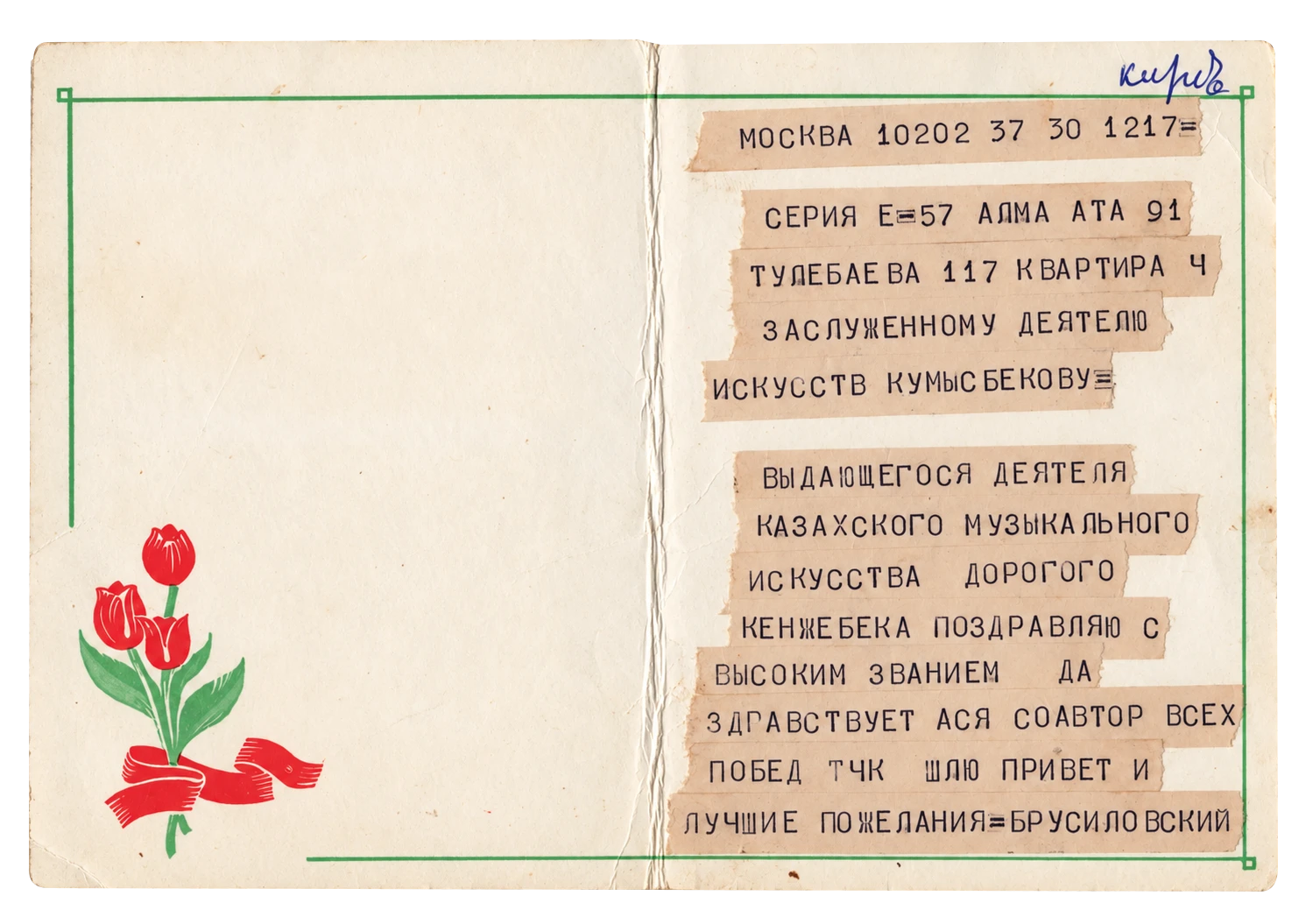
Mukan Tulebayev heard his first art song set to words by Abai. His advice to study composition led Kumysbekov to Yevgeny Brusilovsky’s class. In 1965 he received his second conservatory diploma — this time with the qualification of composer. Ten years separated the two diplomas. Behind the formal change of specialism lay a new possibility: to write music that others would perform.
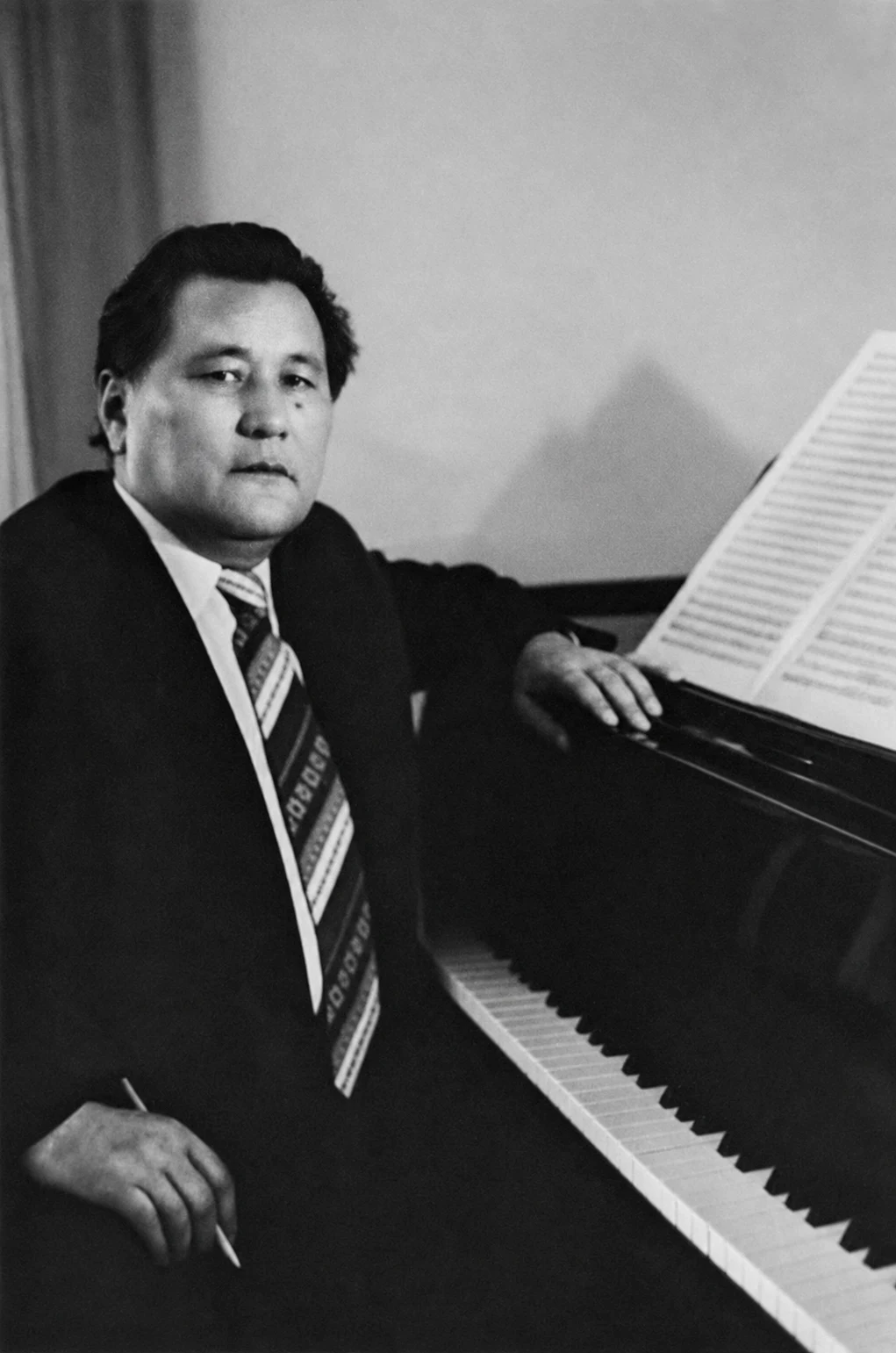
There was a domestic side to these studies. In a rented room of about fifteen square metres stood a grand piano, retired from use and bought with a fee. It occupied almost half the room, but it made practising at home possible. Kumysbekov bought scores and records, thought through his compositions and played different versions for those close to him. The television programme Lichnost preserved this great labour in simple details: an instrument, cramped lodgings, a first listener.
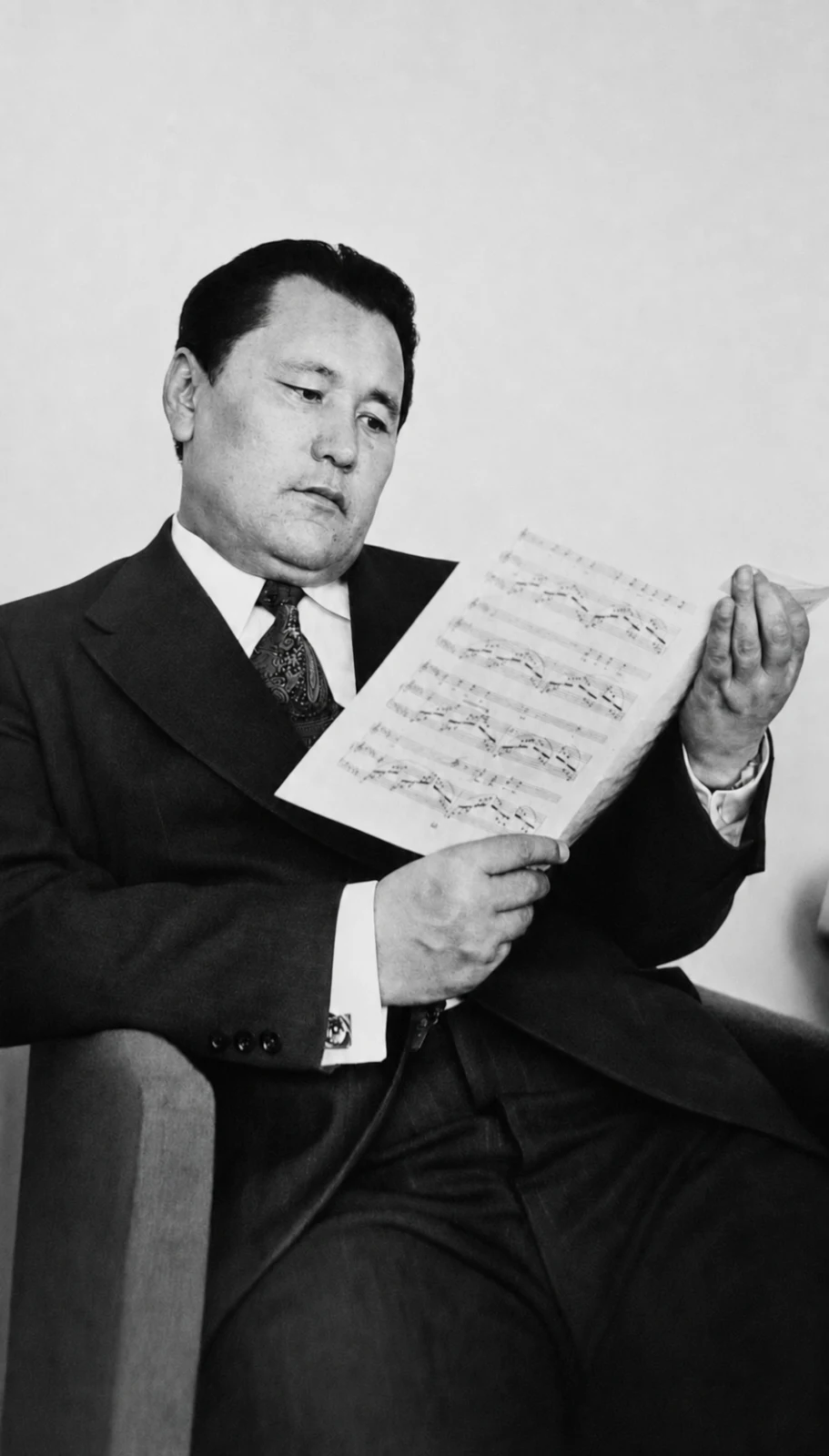
In an archival radio conversation, Kumysbekov explained what drew him to the musical poem. Kazakh music already had composers of operas and symphonies; he saw his own task in developing the kui inherited from Kurmangazy, Tattimbet and their successors. The poem offered room for a person’s inner thought. A folk instrument orchestra could tell it in many voices.
His compositions went on to lead different lives. Poem for cello and piano later sounded in arrangements for other instruments. In Farabi Sazy, a dombra kui expanded into an orchestral work. Dala Syry entered the repertoire of large folk instrument orchestras. In the radio programme Önegeli Öner Zholy, Kerbezim unfolded as a musical portrait of the scholar and traveller Shokan Ualikhanov: youth, the journey to Kashgaria, a St Petersburg waltz. Each of these stories can be continued through listening.
Years of recognition
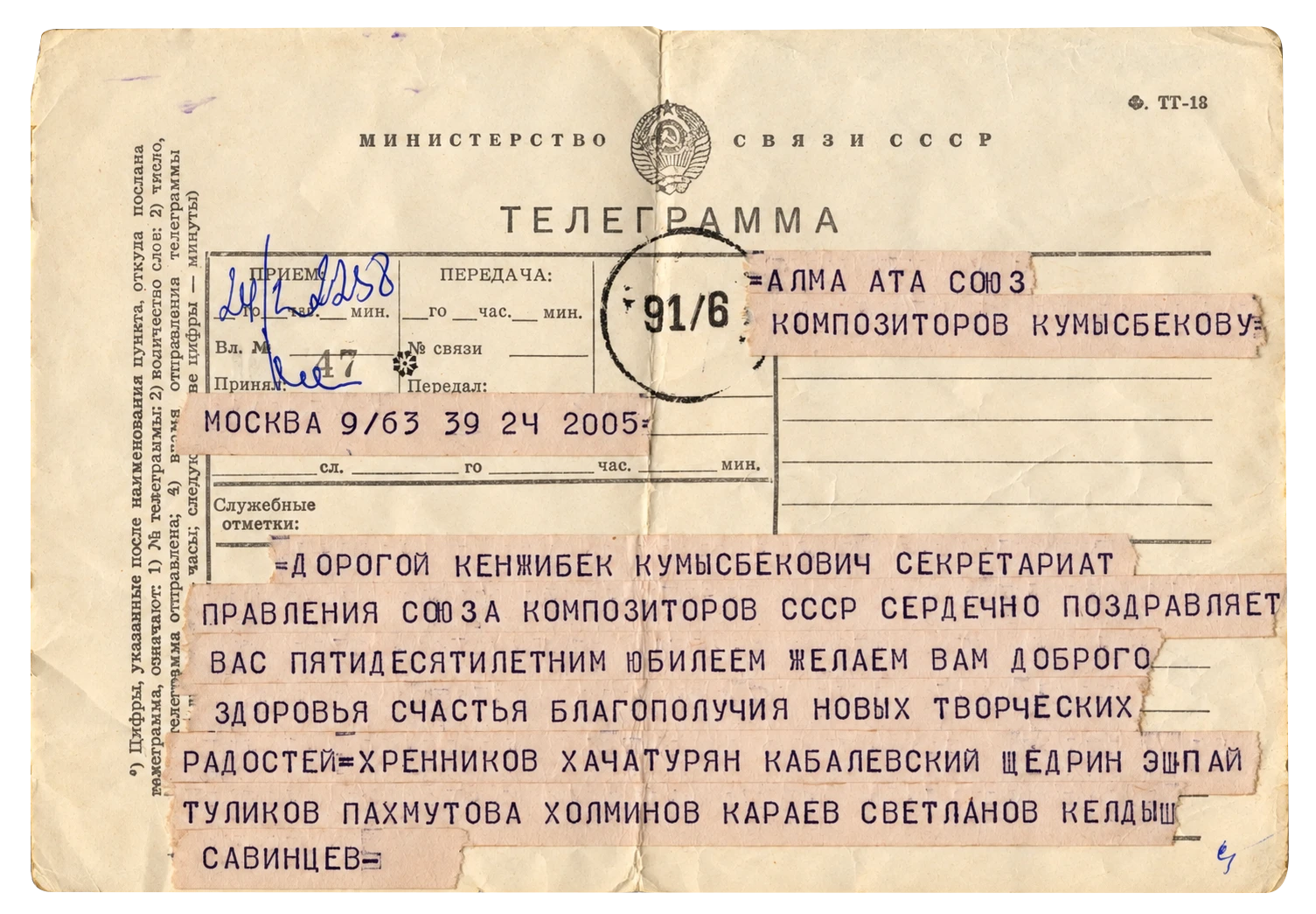
After graduation, Kumysbekov worked as a music editor at the Kazakh State Philharmonic, then as senior editor of the Ministry of Culture’s repertoire board. He wrote his own music and helped select works for concert programmes. Beside the composer’s idea there was always a performer: the person who would open the score and bring it to the stage.
Kumysbekov taught at the conservatory from 1972. Orchestral conducting, the study of instruments, orchestration — behind these subject names lay the ability to hear a work as a whole and understand what each instrument could do. The dean’s office of the orchestral faculty summed up fifteen years of this work: more than sixty graduates were working in the republic’s higher and secondary specialist educational institutions.
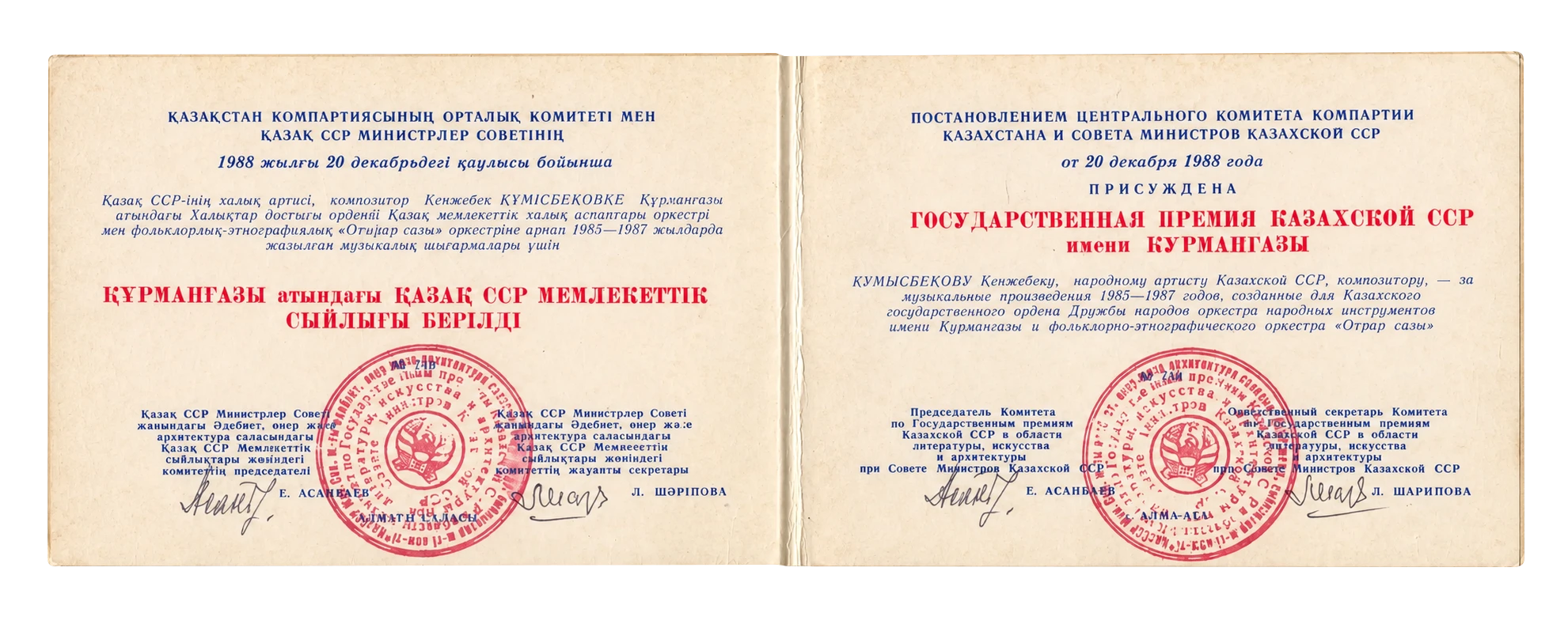
In 1986 Kumysbekov was awarded the academic title of professor in the department of orchestral conducting. In 1988 he received the Kurmangazy State Prize of the Kazakh SSR for compositions written in 1985–1987 for the Kurmangazy Orchestra and the Otyrar Sazy Folk-Ethnographic Orchestra. It was recognition of work heard in concert halls and studied in the classroom.
“Your works are regularly heard on radio and television, in programmes by leading performers, and at state examinations.”
From a congratulatory letter from the dean’s office of the conservatory’s orchestral faculty.
Music passed on
The gravely ill composer handed the score of Amanat to the conductor Aitkali Zhaimov. The conductor understood it as a charge: to perform this music and pass it on. In 1997, preparations were under way in Kumysbekov’s homeland for a concert celebrating his seventieth birthday. After the composer’s death, it became an evening of remembrance. It was held at a music school where more than ninety children studied. Students and teachers played the works of the man the audience had gathered to remember.
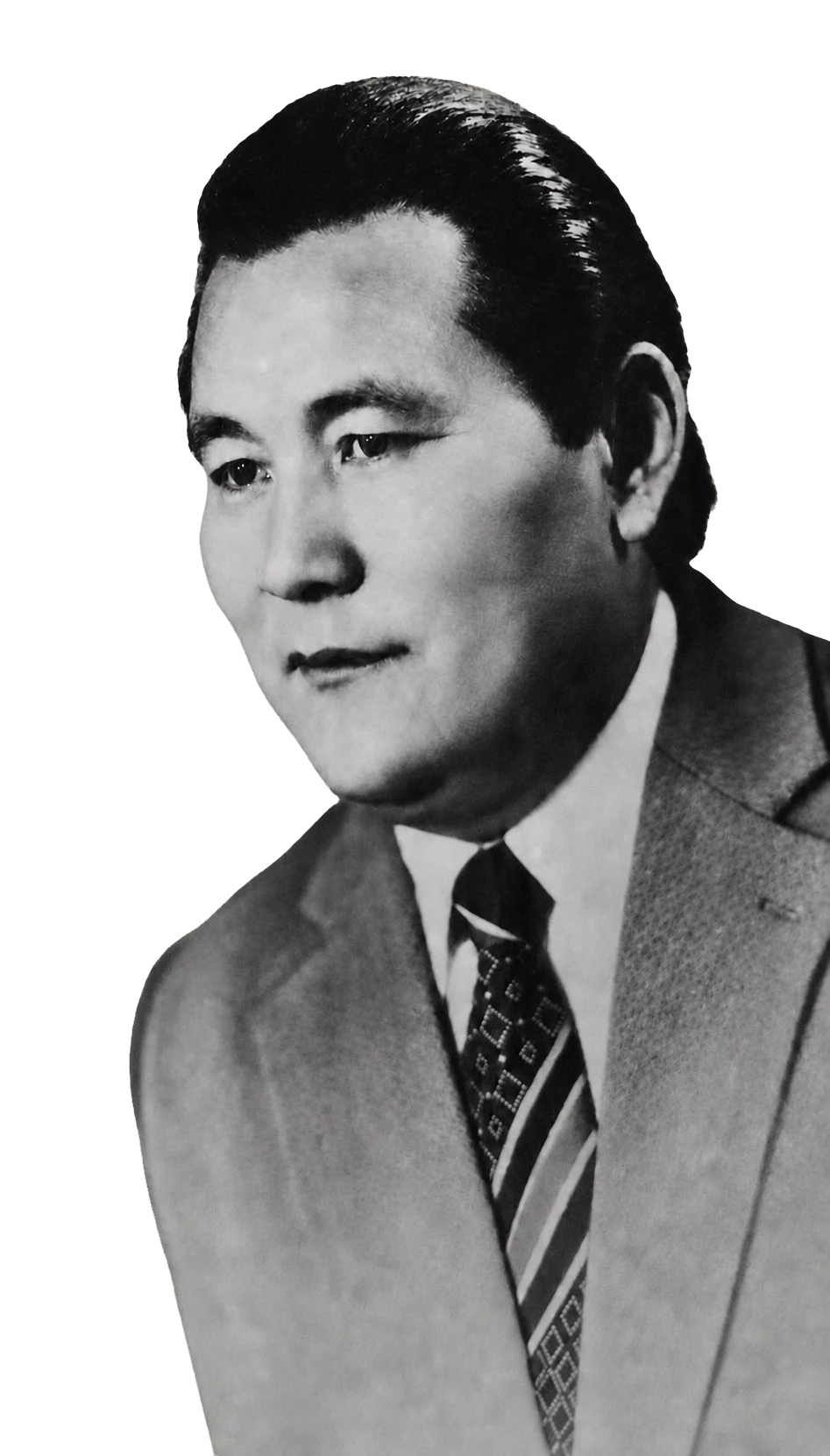
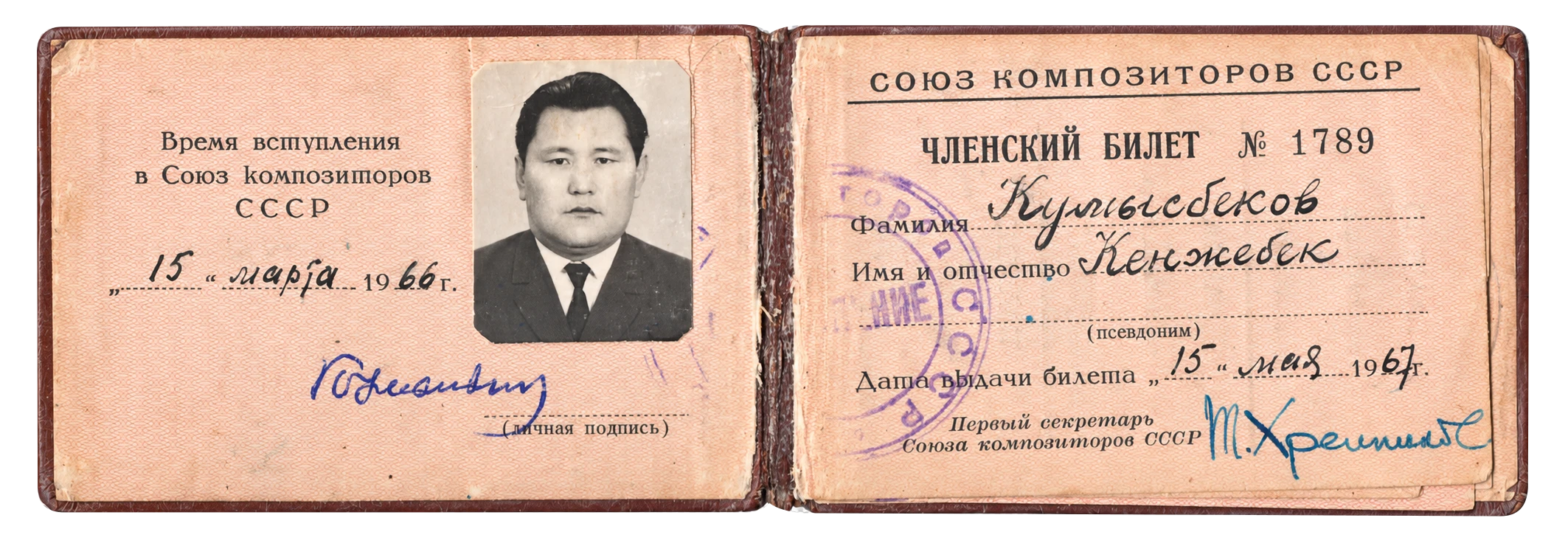
Documents, photographs and recordings preserve Kenzhebek Kumysbekov’s path to composition and the work his performers continue.